Also known as disimpaction.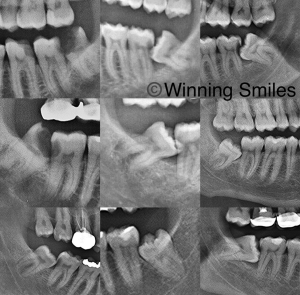
What is the disimpaction of a wisdom tooth?
It is the surgical removal of the embedded or malposed wisdom tooth. The severity of it is in the position, the amount of bone coverage over it and the proximity to vital structures.
It is a high-skill job to remove the wisdom tooth with minimal trauma. The following diagram shows the various depth, location and angles.
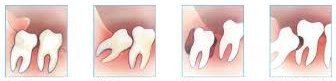
The following signs indicate that you need to get it removed:
- Decaying and malposed wisdom teeth
- Pain across the jaw or radiating to the ear, neck, or head
- Causing cavities in the tooth ahead of it (the second molar).
- Pericoronitis: Recurrent inflammation of the gum flap over the malposed wisdom tooth.
- Swelling of the area around the tooth
- Difficulting in swallowing
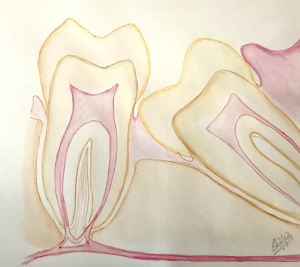
- Cheek bite: Wisdom teeth grow towards the cheek, causing recurrent ulcers.
- Supra-erupting wisdom teeth that cause deflection of the biting pattern often go undiagnosed and can affect the entire set of teeth.
- Globally, it’s done as a preventive measure.

Stories from Sindoor Khela
Wisdom teeth typically erupt in all the wrong directions, and one of the problems they cause is a cheek bite followed by ulcers. This shows a common pattern, so whenever we remove the offending tooth, that ulcer heals. I’m in the habit of asking patients for recall visits to review their complete healing. One such beautiful bong in her late 50s got busy with pujo. (isn’t this typical too 💕) I simply love the vibe of the sindoor bhoron and gleefully become a part of the celebration in all my vanity.#duggadugga ☺️😋. The ones who see me at work can rarely identify me in that avatar. I simply smile, adding, “Where have I seen her?” and escape into the sea of red, white, and gold. Once, when I saw my absconding patient, I had to introduce myself to her delight. “All the pain has gone, but that ulcer is still there,” she merrily replied in ignorance. I told her son-in-law I had to see her, and my worst fears were confirmed when they visited. It was cancerous. Since it was detected very early, the entire lesion was removed before it spread and infiltrated too much. The chance meeting at the pandaal seemed like divine intervention, or was it Maa blessing her pious soul? It’s 4 years old, and she is doing well. #GodIsWatchingUs #20yearsofwinningsmiles #sindoorbhoron #awarenesspost #NonHealingUlcers #lifeasadentist #Alwaysatwork